
How Attention Is Earned: Quirky Headlines, Solid Hooks, and Nailing the First Five Seconds
A press release is judged in seconds, based almost entirely on the subject line or headline…

Flow and Narrative Consistency: When a Story Falls Apart on the Page
Some press releases fail quietly…

Audience: Writing for Readers, Not Journalists
One of the most persistent misconceptions in PR is that we write for journalists…
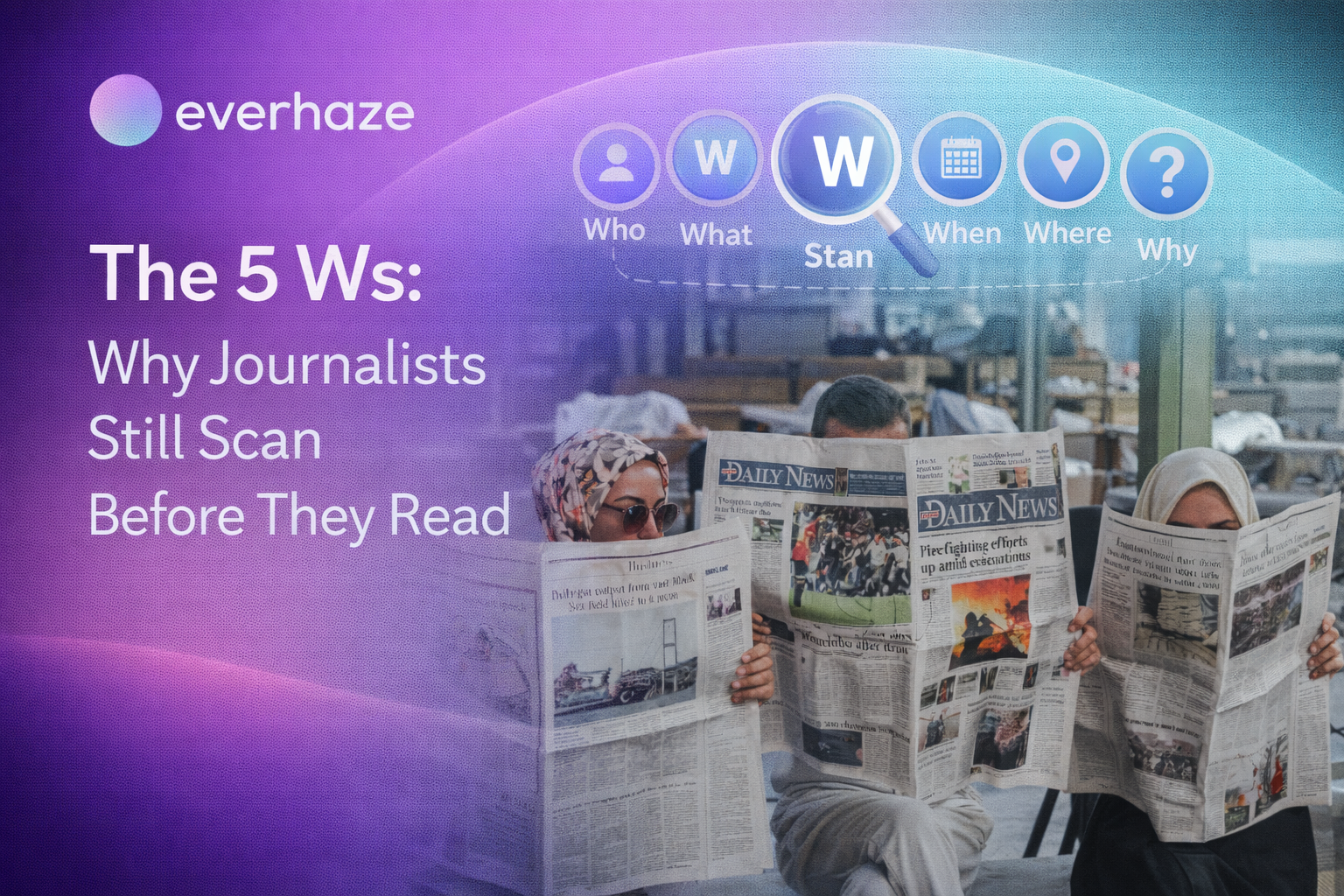
The 5 Ws: Why Journalists Still Scan Before They Read
Once a headline has earned a journalist’s attention, the next decision is made just as quickly…

Subject Matter Expertise: Why Good PR Writers Read More Than They Write
Clear language, confident framing, and credible commentary can give the impression that the writer simply “knows” what to say…

Structure and Information Hierarchy: Writing for Speed, Not for Show
Journalists read press releases differently to almost everyone else…
Qualification and Anchoring: The Difference Between Claims and Credibility
One of the fastest ways to lose a journalist’s trust is to ask them to take something on faith…
Objective First: Why Every Press Release Needs a Clear Goal
One of the most common mistakes in press release and PR content writing is starting with what you want to say rather than what you want to achieve…

Positioning and USP: What You Want to Be Known For (and Whether It’s Landing)
Once a journalist understands what has happened and why it matters, a different question begins to form…

Newsworthiness: Why Anyone Should Care
If a journalist never replies to a pitch, it’s rarely because it was badly written…

Localisation and Context: When the Same Story Doesn’t Travel
A story that works perfectly in one market can fall flat in another…